

Every HR professional knows this truth: hiring talent is easy; understanding people is the real challenge.
Two candidates can have the same qualifications and experience — yet one thrives and grows while the other struggles to fit in. Why? It often comes down to three subtle yet powerful forces that shape how people present themselves at work: values, attitude, and personality.
They influence everything — from how someone handles feedback to how they treat coworkers under pressure. While one may use these terms interchangeably, understanding their differences can help HR professionals make more informed hiring decisions, build stronger teams, and create a culture where people genuinely want to stay.
So, let’s unpack what each one really means — and why this distinction matters so much for HR.
Understanding the Core Concepts
Values – What We Believe In
Values are the invisible compass that guides our choices and priorities. They represent what truly matters to us — things like integrity, respect, growth, and fairness.
In the workplace, values determine whether an employee's personal sense of purpose aligns with the organization's mission. A misalignment here can silently erode engagement and trust, regardless of someone's talent.
For example, if your company values innovation but an employee values stability, they might feel anxious about constant change. Neither is wrong — but the fit matters.
💡 HR Insight: During interviews, ask reflective questions like:
“Tell me about a time you had to make a difficult decision at work — what guided your choice?”
You'll uncover not just what they did, but what they believe in.
b) Attitude – How We Feel and React
If values are what we believe, attitude is how we show up every day. It's our mindset — our emotional lens through which we view people and the challenges they present.
An optimistic, can-do attitude can uplift an entire team. On the other hand, a consistently negative outlook can spread quickly and drain morale.
In HR terms, attitude is often the difference between engagement and resistance, as well as collaboration and conflict.
💡 HR Insight: Notice how employees talk about change. Do they focus on possibilities or problems? The language they use reveals their attitude toward growth and adaptability.
c) Personality – Who We Are Consistently
Personality is the most stable part of who we are — the patterns of behavior that make us predictably us. Some people are naturally detail-oriented, others are social connectors, and some prefer working quietly behind the scenes.
Understanding personality helps HR leaders match people to roles where they can thrive, rather than struggle.
A "C" type personality (conscientious, analytical) may shine in quality assurance, while an "I" type (influential, expressive) might flourish in sales or client relations.
💡 HR Insight: Tools like DISC, MBTI, or Big Five don’t define people — they help you understand how different personalities can complement each other in a team.
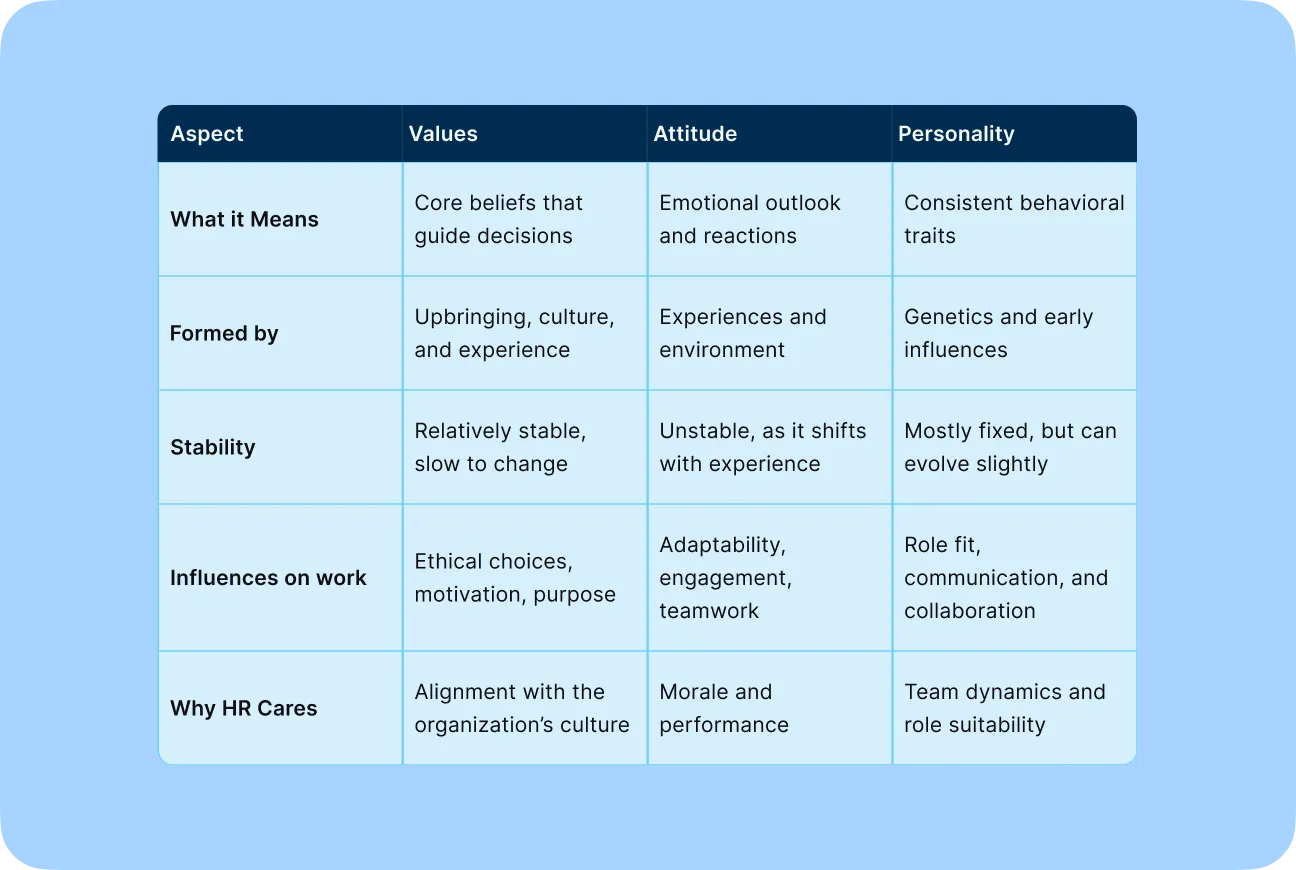
2. Comparative Analysis: Key Differences at a Glance
3. Why HR Needs to Understand All Three
a) Smarter Hiring
Hiring for skills fills roles. Hiring for values, attitude, and personality fosters a strong culture. When HR looks beyond the résumé and understands what drives people, the result is a better fit and lower turnover.
b) Stronger Team Dynamics
Diverse personalities make teams creative. Shared values keep them united.
Recognizing different attitudes helps HR guide conversations before they turn into conflicts.
c) Better Retention & Engagement
People stay where they feel understood. When employees’ values align with the company’s mission — and their personalities are appreciated — engagement soars naturally.
d) Leadership Development
Great leaders are self-aware. They understand their own values, manage their attitude, and use their personality to connect rather than control. HR can nurture this awareness through coaching and feedback.
4. Putting It into Practice
Here’s how HR can apply this understanding in everyday processes:
- In hiring, ask behavioral questions that reveal values and attitudes, not just skills. Use psychometric tools to understand personality fit.
- During onboarding, reinforce organizational values and help new hires understand where they align with them.
- In team-building, facilitate discussions using the DISC or other frameworks to enhance understanding between individuals with different styles.
- In performance management: Coach for attitude and reward value-driven behaviors.
- In cultural initiatives: Build recognition programs that celebrate both the diversity of personality and the unity of values.
5. The HR Takeaway
Values, attitude, and personality are the human layers beneath every résumé, KPI, and performance review.
They explain:
- Values → Why people act the way they do
- Attitude → How they respond to challenges
- Personality → What you can consistently expect from them
When HR understands and applies all three, they don’t just manage people — they build trust, connection, and culture.
Final Thought
Skills get someone noticed — they secure the interview, maybe even the job. But once inside, it’s a person’s values that guide their choices, their attitude that shapes how they handle the ups and downs, and their personality that defines how they connect with others.
As HR professionals, when we look beyond what people can do and start understanding who they are, we create workplaces that feel more human — where people feel seen, respected, and inspired to give their best.
Because at the end of the day, skills might build a career, but values, attitude, and personality create a culture.

Related posts
Lorem ipsum dolor sit amet, consectetur adipiscing elit.