

Imagine this:
Your company announces a new growth plan. There’s excitement in the air—new products, new markets, new technologies. Leadership is confident. Teams are motivated.
Fast forward six months…
Targets are slipping. There are extensions in deadlines. Meetings turn into blame sessions.
Not because people aren’t trying.
Not because the market is bad.
However, the team lacked the necessary skills to bring that vision to life.
That is the silent killer of business growth — Skill Gaps.
What Exactly Is a Skill Gap?
A skill gap is the difference between what your people can do today and what your business needs them to do tomorrow.
And Skill Gap Analysis is the process of identifying that difference — before it becomes a problem.
It’s like going for a health check-up. You may feel fine, but only a diagnosis tells you what’s really happening inside.
Why Corporates Can’t Ignore Skill Gap Analysis Anymore
There was a time when hiring experienced people was enough. Not anymore.
Here’s why:
- AI and Automation are reshaping roles every quarter. Someone who was “skilled” in 2020 may already be behind in 2025.
- Hiring for every new capability isn’t sustainable. Talent is expensive—and attrition makes it worse.
- Employees expect learning and growth. If you don’t help them upgrade, they’ll leave for someone who will.
- Training budgets often go to waste. Most companies invest in generic workshops without knowing what skills actually need fixing.
Skill Gap Analysis fixes that. It gives clarity — so instead of guessing, you act with precision.
Skill Gap Analysis Isn’t an HR Exercise — It’s a Business Strategy
Let’s reframe it:
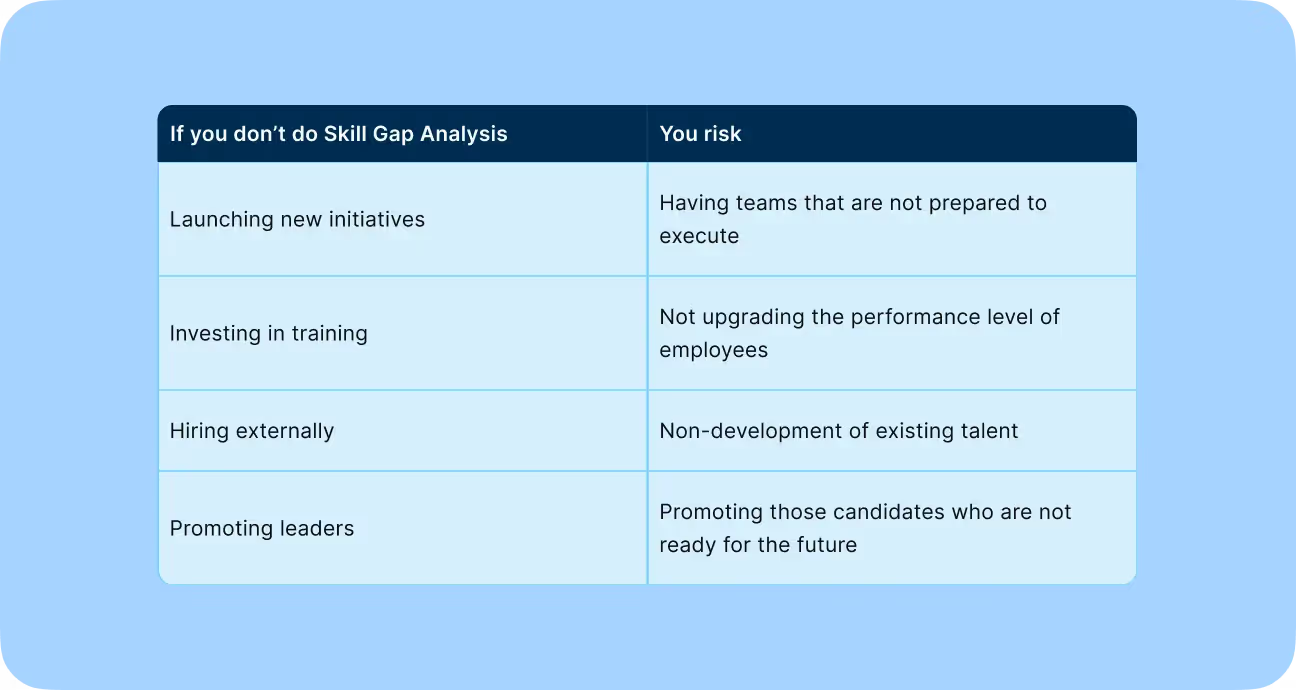
Companies that ignore skill gaps operate reactively. Companies that identify and solve them operate strategically.
How to Actually Do a Skill Gap Analysis — Without Making It Complex
Here’s a simple, practical framework a corporate can follow:
Step 1: Define the Skills That Truly Matter
Don’t start by listing 100 generic competencies.
Start with one question:
“What skills will we absolutely need for the business to succeed in the next 12-24 months?”
Examples:
- If you're expanding into digital, you'll need data fluency, SEO, and campaign analytics.
- To push Automation, you need an AI adoption mindset, process mapping, and change management.
- If scaling teams, you need leadership depth, collaboration, and conflict resolution.
Step 2: Assess Current Skill Levels
There are multiple ways to do this, depending on whether you're evaluating technical skills or behavioral skills.
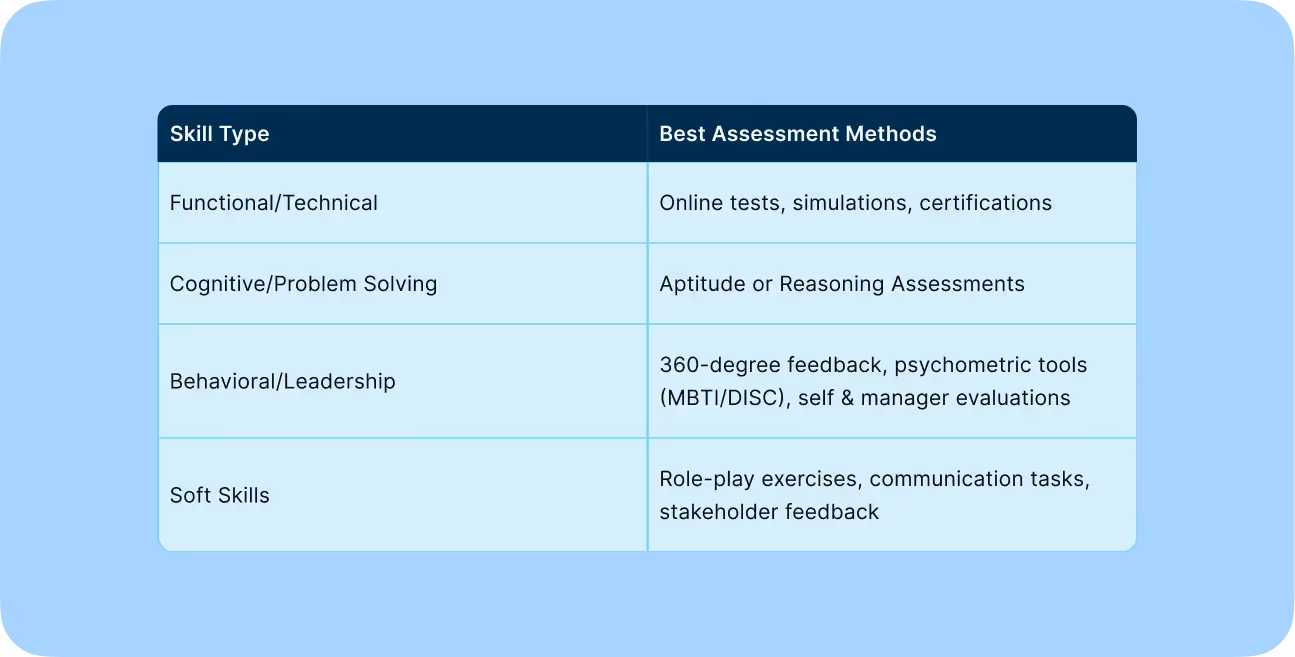
The key here is objectivity — don’t rely just on manager perception or self-confidence levels.
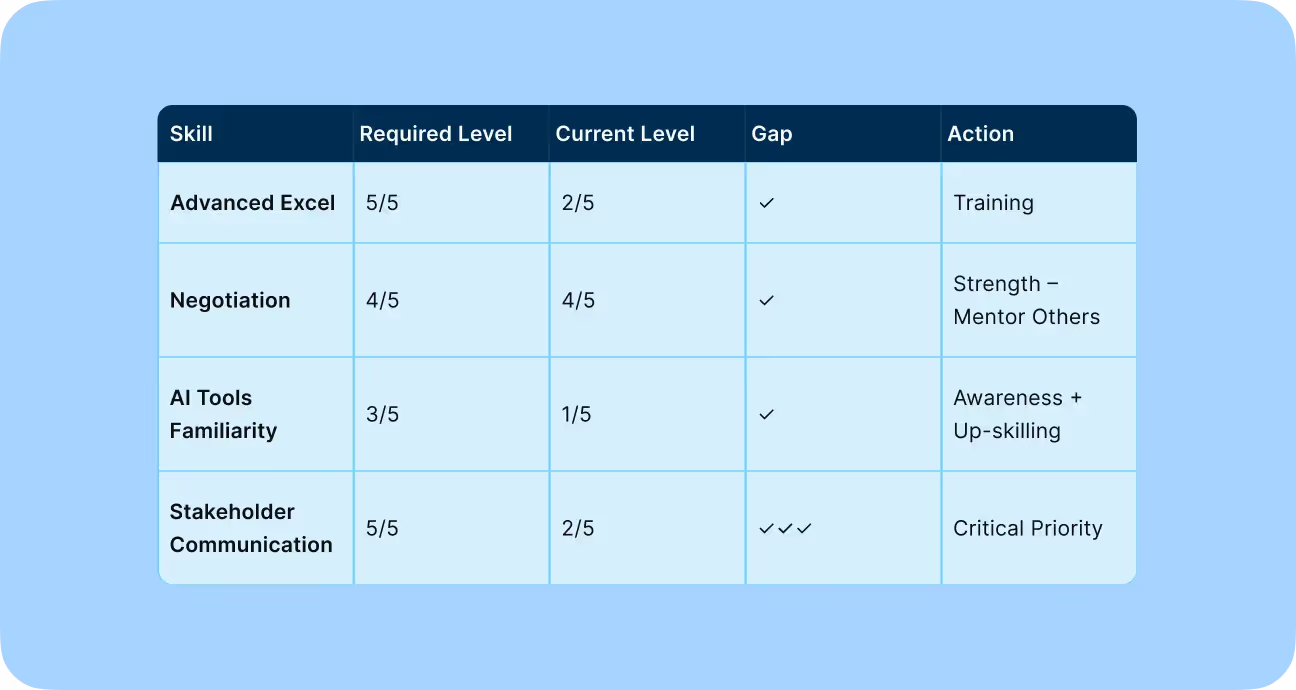
Step 3: Map the Gap
Compare “skills needed” vs “skills available.”
You can map this:
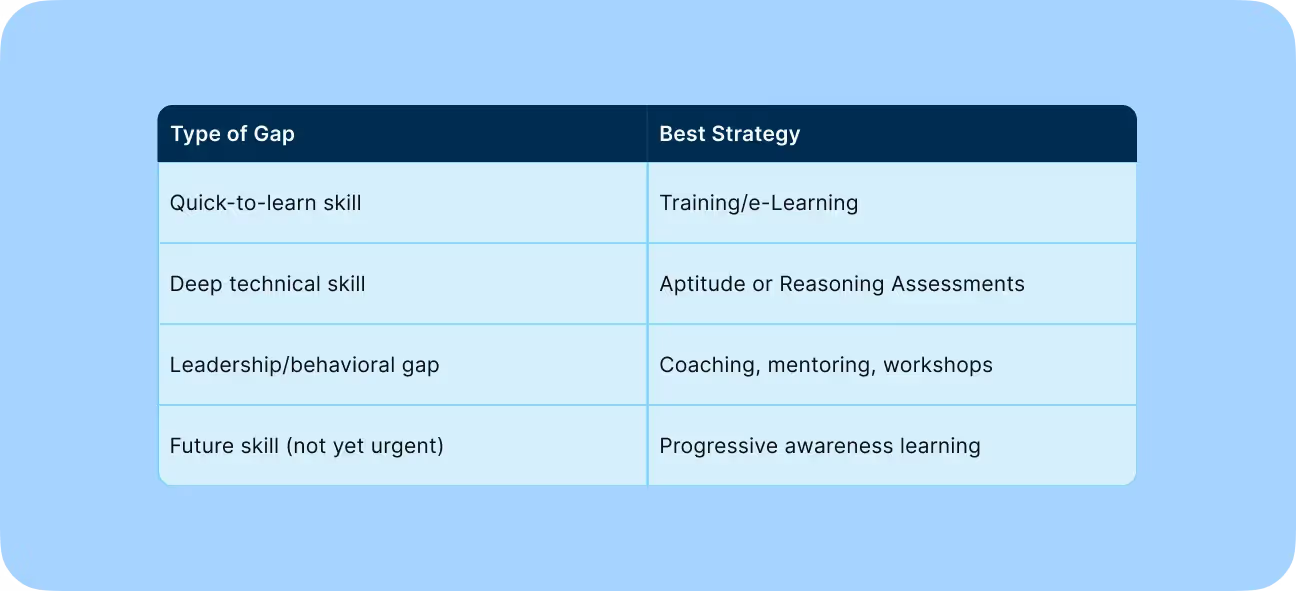
Step 4: Take the Right Action
Not every gap requires training. Sometimes hiring is faster. Sometimes, restructuring roles is smarter.
Real-Life Scenarios Where Skill Gap Analysis Changes the Game
⇒ Sales Team Example:
A company struggling with low conversions assumed product knowledge was the issue.
Skill analysis revealed that the real gap was in consultative selling and objection handling, rather than product training: different problem, different solution.
⇒ IT Department Example:
Leadership assumed AI adoption was low due to a lack of technical expertise.
Mindset resistance (fear of Automation) was the bigger skill gap. So instead of coding bootcamps, they ran change enablement workshops.
⇒ Manufacturing Example:
A factory spent lakhs on training workers on new machines — only to realize basic digital literacy was missing. They were teaching advanced tools without building a foundation.
The Most Common Mistakes Companies Make
Doing it only during appraisal season
➝Skill analysis must be continuous — not an annual checkbox.
⤯ Focusing only on technical skills
➝ Soft skills like communication, problem-solving, and adaptability are often the real blockers.
⤯ Collecting data and doing nothing
➝ Employees lose trust when identification of gaps happens, but no rectification.
The Payoff — What You Gain from Doing This Right
- More innovative training spends — no more “blanket workshops” that change nothing.
- Higher retention — employees stay longer when they see absolute development paths.
- Faster hiring decisions — because now you know precisely what to hire for
- Better succession planning — you know who can grow into what
- More confident leadership — because talent strategy is no longer guesswork
Final Thought: Skill Gap Analysis Isn’t About Finding Flaws — It’s About Building Future Champions
Let’s stop treating it as a fault-finding mission.
It’s not about saying, “You’re not good enough.”
It’s about saying,
“Here’s where we are today. Here’s where we want to be. Let’s bridge it together.”
Companies that embrace this mindset will build resilient, future-ready workforces.
The question is—
Are you planning your talent strategy — or leaving it to chance?

Related posts
Lorem ipsum dolor sit amet, consectetur adipiscing elit.