
As an HR leader, you probably juggle multiple priorities every day—hiring the right people, keeping teams engaged, helping managers lead better, and preparing employees for future roles. To do all this effectively, you need more than just résumés and performance data. You need to understand what motivates people.
That’s where personality and behavioral assessments come in. Two of the most popular ones are the DISC test and the 16Personalities (MBTI-inspired) test. Both have their strengths, but they're not the same. It raises a practical question: Should employees stick with just DISC, or is it worth using both?
Let’s break it down.
A Quick Look at DISC
The DISC assessment is all about behavior—how people act, communicate, and make decisions at work. It places employees into four broad styles:
- Dominance (D): Direct, results-focused, decisive.
- Influence (I): Outgoing, enthusiastic, persuasive.
- Steadiness (S): Patient, dependable, supportive.
- Conscientiousness (C): Analytical, detail-oriented, precise.
What makes DISC so popular in organizations is its simplicity and practicality. Teams can quickly learn the framework and apply it to:
- Reduce miscommunication.
- Align people to roles that suit their style.
- Help managers adapt their leadership approach.
- Improve team collaboration almost immediately.
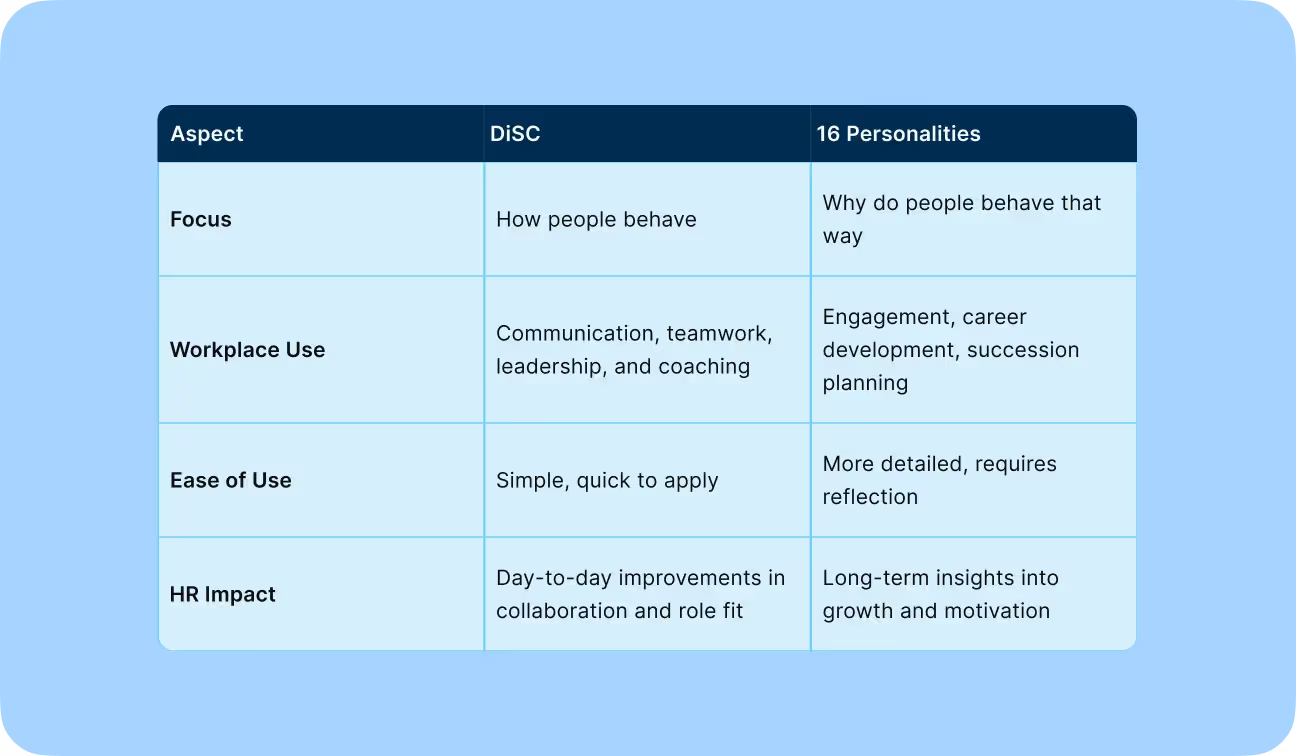
In short, DISC answers the question: “How does this person behave at work?”
A Quick Look at 16Personalities
On the other hand, the 16Personalities test goes a layer deeper into personality preferences. It categorizes people across four spectrums:
- Introvert (I) vs. Extrovert (E)
- Intuitive (N) vs. Observant (S)
- Thinking (T) vs. Feeling (F)
- Judging (J) vs. Prospecting (P)
The result is one of 16 personality types (like ENTJ, INFP, or ISFJ). These profiles uncover someone’s motivations, values, and mindset, rather than just observable behavior.
For HR leaders, 16Personalities is particularly helpful for:
- Understanding what motivates employees and keeps them engaged.
- Shaping career paths and learning journeys.
- Spotting leadership traits and future growth potential.
In other words, 16Personalities answers the question: “Why does this person behave this way?”
DISC vs. 16Personalities: What’s the Difference?
While both tools fall under the “personality test” umbrella, they serve different purposes. Here’s a quick way to see the distinction:
When DISC Alone Is Enough
If your primary goal is to enhance team performance and workplace communication quickly, DISC can achieve this on its own.
It’s easy to roll out, employees can remember it, and managers can use it right away in conversations. That makes DISC perfect for:
- Team-building sessions.
- Manager coaching.
- Resolving conflicts.
- Aligning employees with the right projects or responsibilities.
Many organizations stop here—and that's fine. DISC is a strong standalone tool when the focus is on immediate workplace outcomes.
When to Use Both DISC and 16Personalities
If your HR strategy also emphasizes employee growth, engagement, and leadership development, combining DISC with 16Personalities is the more imaginative play.
Here’s why:
- You Get a Complete Picture
DISC shows how someone behaves, while 16Personalities explains why they act that way.
- Better Learning & Development
DISC helps with group workshops and communication training, whereas 16Personalities supports deeper, individualized career coaching.
- Stronger Career Conversations
Employees often want to know not just how they work best today, but also how their personality shapes their future opportunities. Combining both assessments makes these discussions richer and more personal.
- Smarter Team Mapping
DISC ensures behavioral diversity within teams (some quick decision-makers, some detail-oriented, etc.). 16Personalities adds the motivational layer (who thrives on structure, who prefers flexibility, who’s driven by vision). Together, HR leaders can balance teams more effectively.
The Purpose-Driven Approach
The choice between DISC and 16Personalities shouldn’t be about which is “better.” It should depend on what you’re trying to achieve.
- Use DISC if:
- Your focus is on communication, teamwork, leadership coaching, or role alignment.
- Use both DISC and 16Personalities if:
- You want to build long-term engagement, design personalized career paths, and prepare employees for future leadership.
When HR leaders match the right tool to the right purpose, assessments stop feeling like just another HR activity and start driving real business impact.
Practical Tips for HR Leaders
Here’s how you can make the most of these tools:
- Start simple: Roll out DISC first—it gives quick wins and a common language for teams.
- Add depth over time: Introduce 16Personalities during career development or leadership programs.
- Frame it positively: Position assessments as growth tools, not performance evaluations.
- Apply insights widely: Use results in recruitment, onboarding, coaching, and succession planning.
- Keep it actionable: Translate findings into simple steps that managers and employees can actually use.
- Integrate leadership training: Help managers understand assessment results so they can tailor their communication and management styles to meet the needs of their team members.
- Use in team workshops: Facilitate group sessions where employees share their styles, fostering empathy and reducing misunderstandings.
- Update regularly: Encourage employees to revisit assessments every few years, as behaviors and preferences can evolve with experience.
- Link to performance conversations: Use insights to guide feedback discussions, focusing on strengths and areas for potential growth.
- Measure impact: Track changes in engagement, collaboration, or retention to show the business value of using assessments.
Final Thoughts
DISC and 16Personalities aren’t rivals—they’re two lenses looking at the same person from different angles.
- DISC reveals how employees present themselves in the workplace.
- 16Personalities reveal why they show up that way.
If you're looking for fast and practical improvements in collaboration and leadership, DISC can help you achieve them. However, if you want to go deeper—assisting employees to grow, building engagement, and preparing your next generation of leaders—then combining both is the best approach.
For HR leaders, the real win comes from using these tools not in isolation, but strategically, with clear intent. Done well, they don’t just improve how people work together today; they help shape a culture where employees feel understood, motivated, and ready for tomorrow’s challenges.

Related posts
Lorem ipsum dolor sit amet, consectetur adipiscing elit.