
In every organization, people bring more than just skills and experience.
They bring what they believe, how they think, and how they naturally behave.
These three elements — values, attitude, and personality — quietly shape everything:
How people collaborate, solve problems, lead, and contribute to culture.
Yet, we often mix these terms up.
This blog offers a simple, human-centered comparative analysis to help HR leaders, managers, and talent professionals understand how each one influences hiring, performance, and organizational culture.
Let’s break it down.
1. Values: What a Person Stands For
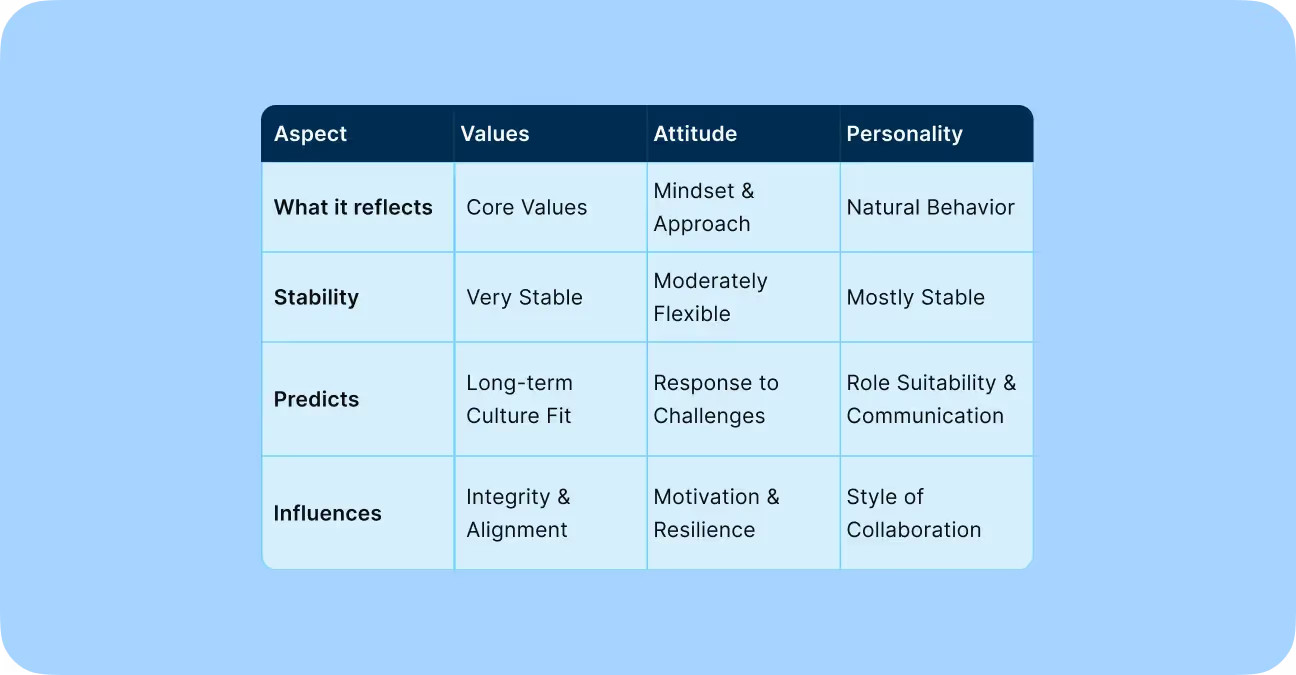
Values are the deepest part of a person’s behavioral makeup — the principles and beliefs that guide decisions and shape what they consider “right.”
These don't usually change quickly. Life experiences and deeply held convictions shape them.
What values sound like:
- “I believe in honesty.”
- “Teamwork matters to me.”
- “I need fairness in the workplace.”
In hiring:
Values help predict long-term fit.
Someone whose values align with the company's mission will naturally feel more connected and committed.
In performance:
Values drive consistency and integrity.
A person who values accountability doesn't need supervision to do the right thing.
In culture:
Values are the glue.
When team values align, trust and collaboration flourish.
When they don't, conflict brews beneath the surface.
2. Attitude: How a Person Responds to Situations
Attitude is someone’s mindset — the way they interpret challenges, feedback, pressure, or change.
Unlike values, attitude is more flexible.
It can improve with coaching, a supportive environment, and self-awareness.
What attitude sounds like:
- “I can figure this out.”
- “Let’s try a different approach.”
- “This setback is frustrating, but I’ll move forward.”
In hiring:
A positive, resilient attitude can outweigh technical gaps.
A poor attitude, on the other hand, can drain a team faster than any skill shortage.
In performance:
Attitude determines whether someone grows or gets stuck.
It shows up in initiative, adaptability, and emotional maturity.
In culture:
Attitude is contagious — for better or worse.
A single person with a consistently negative outlook can dramatically shift team morale.
3. Personality: How a Person Naturally Shows Up
Personality is the set of traits that shapes how people communicate, process information, and interact with others.
It's not "good" or "bad" — just different.
Introversion, extroversion, logic-driven, creative, assertive, calm — all are personality expressions.
What personality looks like:
- Communication style
- Work preferences
- Decision-making patterns
- Collaboration style
In hiring:
Specific roles match certain personalities better.
A highly structured role may suit an organized, detail-oriented person, while a dynamic client-facing role may align better with an expressive, high-energy personality.
In performance:
Knowing someone’s personality helps managers support them better — how they prefer feedback, what motivates them, and what environments help them thrive.
In culture:
Personality diversity adds richness.
Teams that embrace different working styles innovate faster and build stronger relationships.
Why HR Needs All Three — Not Just One
Hiring only for skills is outdated.
Hiring only for personality risks bias.
Hiring only for values is too narrow.
The real power lies in understanding how all three interact.
- Values ensure the person fits the organization.
- Attitude shows whether they’ll thrive and grow.
- Personality predicts how they'll work day to day.
When you consider all three, you don’t just fill roles — you build teams that perform, collaborate, and elevate your culture.
Final Thought
Employees aren’t just resumes — they’re humans with beliefs, reactions, and natural tendencies.
When organizations understand these layers, they make smarter hiring decisions, reduce friction, and build workplaces where people truly belong.
Values anchor people.
Attitude fuels their journey.
Personality colors their contribution.
When these align with the organization’s needs and culture, great things happen — engagement rises, performance becomes consistent, and teams move in harmony.
That’s the real impact of understanding the difference between values, attitude, and personality — and why this comparative analysis matters more today than ever.